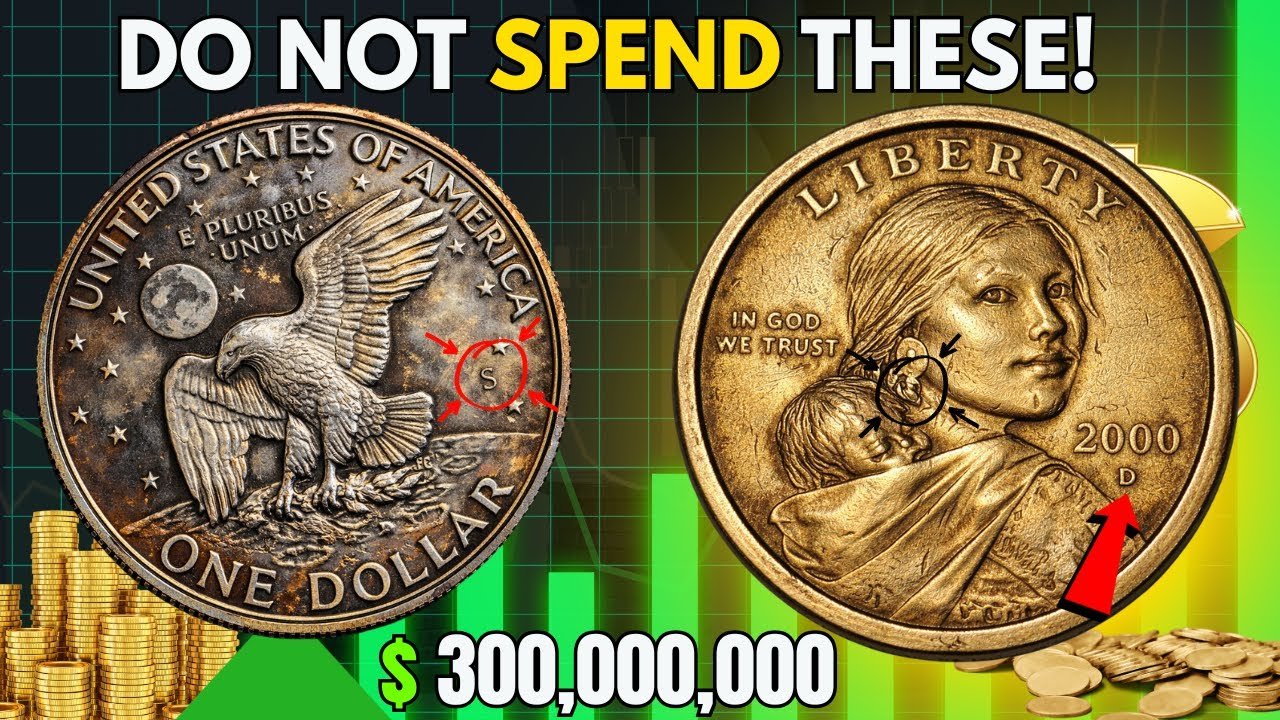
What if the loose $1 coin sitting in your pocket right now could be worth thousands—or even millions—of dollars?
It may sound unbelievable, but history proves it’s possible. Some of the most valuable coins ever sold didn’t start as rare treasures. They began as ordinary $1 coins, quietly released into circulation with tiny minting errors that later made them legendary.
 Samsung Galaxy Z Fold 8 – Oppo Can’t Compete!
 TVS Jupiter 110 vs Hero Pleasure Plus Xtec: Detailed Comparison
From missing details to doubled designs and wrong metal compositions, these mistakes transformed everyday coins into million-dollar collectibles. Let’s explore how these errors happen, why collectors go crazy for them, and which $1 coins prove that small mistakes can create massive value.
How Million-Dollar Coin Errors Begin
Every U.S. coin is produced through a precise minting process. But when machines misalign, dies crack, or wrong blanks are used, errors are born.
 यूपी बोर्ड रिजल्ट की तैयारी शुरू, इस बार कॉपी चेकिंग के नया नियम लागू – UP Board Result 2026 New Rules
 Toyota Century 2026 Revealed: Hand-Built Luxury, Absolute Silence & Ultimate Flagship Presence
Most errors are caught and destroyed. A few slip through—and those are the coins that change lives.
Collectors value error coins because:
 2026 Green Opel Astra Sports Tourer Hybrid – Interior and Exterior Walkaround 4K
 ईरान की जंग के बीच चीन ने पेट्रोल-डीजल के एक्सपोर्ट पर लगाई रोक, भारत में क्या होगा असर?
-
They are extremely rare
-
Each mistake is unique
-
They represent a moment when the U.S. Mint went wrong


And when rarity meets demand, prices explode.
 Maruti Suzuki Working On New Compact Cars – All Key Details
 8th Pay Commission March 2026 Update: Current Status, Timeline Expectations, and Pension Impact
The $1 Coins That Shocked the Collecting World
1. The 2000-P Sacagawea “Cheerios” Dollar
This coin looks normal at first glance—but flip it over, and the eagle’s tail feathers are far more detailed than usual.
Only about 5,500 coins were accidentally released inside Cheerios cereal boxes during a promotion.
💰 Value Today:
Up to $25,000+, depending on condition
This error taught collectors one key lesson: packaging mistakes can create rare coins.
2. The Sacagawea Dollar Struck on a Quarter Planchet
Imagine a $1 coin that’s smaller, lighter, and thinner than normal.
Some Sacagawea dollars were accidentally struck on quarter-sized blanks, creating one of the most dramatic errors ever seen.
💰 Value:
$15,000 to $50,000+
The error is obvious—but only if you know what to look for.
3. The 2007–2016 Presidential $1 “Missing Edge Lettering” Error
This error changed modern coin collecting forever.
Presidential $1 coins were supposed to have edge lettering with:
-
The year
-
“E Pluribus Unum”
-
Mint mark
But thousands were released with completely blank edges.
💰 Early Value: $300–$3,000
💰 High-Grade Examples: Still rising
This proves that even recent coins can become valuable fast.
4. Double Die $1 Coins — Small Doubling, Huge Money
Double die errors happen when a coin die receives multiple misaligned impressions, causing doubling in letters or numbers.
On $1 coins, doubling is often found in:
-
Dates
-
Liberty inscriptions
-
Presidential portraits
💰 Value Range:
$1,000 to $100,000+, depending on strength and rarity
Many collectors miss these because the doubling can be subtle.
5. Wrong Metal Errors — The Jackpot Mistake
Some of the most valuable $1 coins in history were struck on the wrong metal entirely.
Examples include:
-
$1 coins struck on foreign coin blanks
-
$1 coins struck on experimental metals
-
Transitional errors during metal composition changes
💰 Potential Value:
Six figures to over $1 million in extreme cases
These are the coins auction houses dream about.
Why Coin Errors Can Reach Million-Dollar Prices
A coin’s value skyrockets when four factors align:
-
Extreme rarity – Only a few known examples
-
Clear, dramatic error – Easy to verify
-
High-grade condition – Minimal wear
-
Strong collector demand – Especially for U.S. coins
Once a coin checks all four boxes, prices can climb into the stratosphere.
How to Check Your $1 Coins Right Now
Before spending your next dollar coin, take a closer look:
✅ Check the edge lettering (or lack of it)
✅ Compare weight and size with a normal $1 coin
✅ Look for doubling using a magnifier
✅ Inspect color and metal tone
✅ Watch for off-center or partial designs
Many rare errors were found by ordinary people, not professional collectors.
Could the Next Million-Dollar Coin Still Be Out There?
Absolutely.
History shows that some error coins:
-
Stayed unnoticed for decades
-
Were spent as regular change
-
Sat in jars, drawers, and wallets
Collectors believe more undiscovered error coins still exist, especially among modern $1 coins that people often ignore.
That’s what makes this hobby so exciting—the next life-changing discovery could be hiding in plain sight.
Final Thoughts
Million-dollar coin errors don’t start as treasures.
They start as tiny mistakes—missed by machines, overlooked by people, and dismissed as ordinary change.
These $1 coins prove that value isn’t always obvious at first glance.
So the next time you receive a $1 coin, don’t spend it too quickly.
Examine it.
Flip it.
Weigh it.
Because sometimes, history’s most valuable coins begin exactly like that.